Play as Learning - More on the ‘Curriculum’ at Wild Oaks Forest School
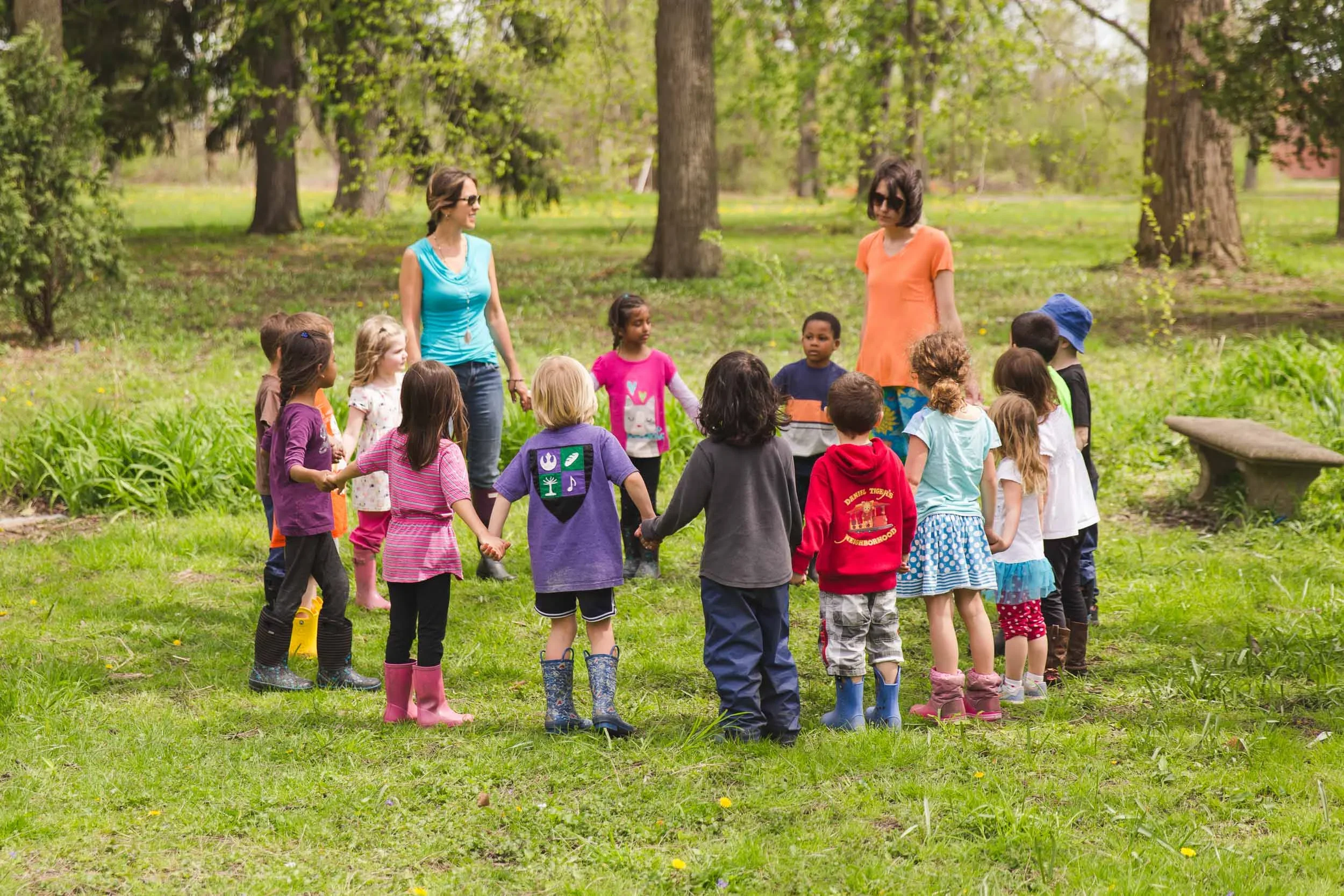
I recently attended Alabama’s Nature School conference where a question was presented as a predominant theme across all schools in the state: How do we explain what we do in the forest to parents to get them to see the incredible benefits of play, specifically outdoors, as also educational?
So, I wanted to send a letter out to everyone to express how our “curriculum” is formed. Wild Oaks is a child-led, inquiry based outdoor classroom. Let’s break down those phrases:
child led: the child is their own leader, exploring what their little minds want to in that moment of time.
inquiry based: asking questions, forming hypotheses & seeking out answers in the real world through experimentation/kinesthetic learning in the form of play
Why is this important?
As an occupational therapist, I can confidently tell you- there is no greater occupation a child engages in than play. Play teaches a child everything about everything. Within the first 2 years of life, children build over 1 million neural connections per second. A child’s brain at the age of 2 becomes a sponge- it is the time in our life where the getting out & “doing” of things is easiest and creates the biggest impact for our entire life to come. A child’s brain at the age of 7 is essentially developed in the sense of incredible bursts of new neural developments. After 7, a lot more effort is required. Play-based learning is hands-on & actively engaging in a multi-sensory way.
At a toddler play conference I attended, research was given to bust these myths:
Play is not learning.
Play doesn’t support brain or body development.
Play isn’t multisensory.
Play doesn’t boost language development or social-emotional development.
Play doesn’t boost problem solving or other executive functioning skills.
Here’s what the research shows (and what I have seen for 14 solid years as a pediatric therapist):
Free play (think recess when you were a child) is the best way for children to learn. Imaginative play, social skills & executive functioning skills develop here. When joy & wonder are a part of this, increased intrinsic motivation is present along with better memory & increased dopamine and creativity.
To be considered play-based learning, play must include:
joy & wonder (enter the forest!!)
meaningful (linked to real life)
actively engaging (child-led & immersive)
iterative (repetitive & resilient building)
relational (building pathways for empathy)
Finland (the gold standard for education worldwide) has shown that starting directed learning after the age of 7 actually increases your child’s chance of being a better learner. Play should be the main form of “education” in a child’s life prior to age 7. The Cognitive Hypothesis that developed in the 1990’s came into our world & wreaked havoc on our child-led play-based learning models. Research actually shows that children who participated in play until the age of 7 far surpass children who focus on learning phonics, math skills, etc. before the age of 7. Can you guess why?
Resiliency. Play (especially risky play) builds resilience & fosters creativity, problem solving & empathy. The biggest age of impact for this…. ages 3-6! Hello, Wild Oaks Forest School!
Multi-sensory experiences happen through directed attention around the age of 3, with a big burst around ages 4-6. This looks like specific, honing in on something in your environment. Think flashlight versus floodlight. Floodlight attention would be what happens 0-3yo, with children taking in everything around them. Flashlight attention is laser focused, to use a nature metaphor: seeing the trees in the forest ;)
Any time you can engage every sense of a child’s sensory system, they become more resilient with increased executive functioning skills as well as social-emotional learning and cooperation. Nature encompasses all senses while calming the nervous system.
An incredible amount of research has been published in the last 10 years stating the incredible benefits being in nature has for our nervous system, and our immune systems, not to mention the spiritual, heart-connected impacts it gives — feelings of compassion & interconnectedness. The effects of grounding, also known as Earthing, are becoming more and more talked about as well. Feeling the frequency of the Earth’s energy vibrations is innately calming and centering. Imagine getting to have your hands in that from 830-1230 3 days a week?! Ah, perfection!!
I won’t ramble on any longer, but wanted to give you all a peek into the WHY of Wild Oaks “curriculum.” I will leave you with two podcasts of mine in case you want to do a deeper dive—
The benefits of earthing/grounding: https://podcasts.apple.com/us/podcast/integrative-ot/id1656175056?i=1000637852879 (this dives into the science for how being in nature impacts our bodies, minds & spirits).
The benefits of nature-based therapies: https://podcasts.apple.com/us/podcast/integrative-ot/id1656175056?i=1000604420529 (this one is good to learn about gross motor skill development, fine motor skill development & even more on those executive skills I mentioned above)!
Love,
Magan Higgins Gramling, Co-Founder of Wild Oaks Forest School